The Making of Thame Neighbourhood Plan 2

Introduction

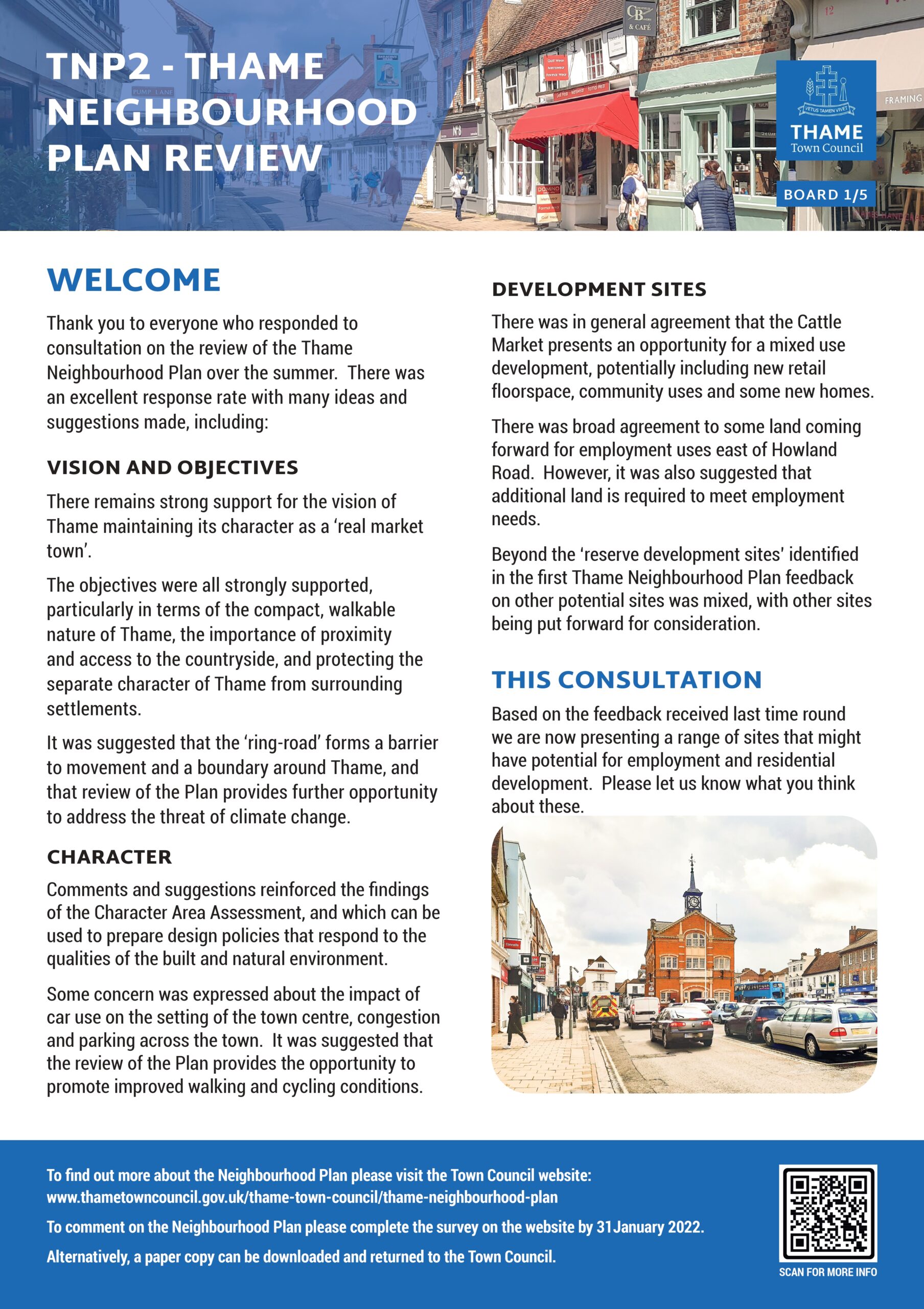
Since July 2013, the Thame Neighbourhood Plan (TNP) – the community’s vision for the future of the town – has been used to help guide the District Council in making their decisions on the majority of planning applications in Thame and Moreton. But many local people cannot afford to rent or buy a home where they have their roots. The town needs infrastructure, like more community meeting space, improved health facilities, and better means of getting around.

Thame’s Neighbourhood Plan 2 began development in 2021. It builds on its predecessor by focusing not only on guiding development in new areas but also guiding changes within established parts of the town, such as the retention of parking spaces in the Town Centre, proposals for a budget supermarket in the Town Centre, a new community centre, and new public parkland and accessible spaces.

In 2021, after the first consultation for the new Neighbourhood Plan (TNP2), it was found that the residents and businesses of Thame wanted the Plan to keep the same effective clear vision and objectives. 500 sets of comments were made by the public. After a further two consultations and an additional 1,100 sets of comments later, the Submission Plan was presented to Thame’s Full Council. In May 2024, the Council submitted the plan to SODC for further consultation and independent examination. In November 2024, the independent examiner recommended that the Plan proceed to referendum. In February 2025, Thame voted ‘yes’ to adopt the Thame Neighbourhood Plan 2.

Page Navigation / Timeline

Full timeline, latest event listed first:

Reports

Referendum

6th February 2025

South Oxfordshire District Council announced the date for a Referendum relating to the adoption of the Thame Neighbourhood Plan 2 (TNP2) as Thursday 6th February 2025. Thame residents voted in the single-question Referendum: Do you want South Oxfordshire District Council (SODC) to use the Neighbourhood Plan for Thame to help it decide planning applications in the neighbourhood area?

The results were as follows:

  • The number of votes cast in favour of YES – 2035 (89.14%)
  • The number of votes cast in favour of NO – 248 (10.86%)
  • Voter turnout was 22%

Thame Neighbourhood Plan 2 (Referendum Version)

Information Statement and Information for Voters

Examination

November 2024

South Oxfordshire District Council now sent the draft plan documents and comments received during the publicity period for independent examination.

Examining Officer, Andrew Ashcroft was appointed by the District Council to carry out the examination. He was responsible for recommending any necessary alterations to the Plan, and ultimately recommending if the plan proceed to referendum. 

Examination documents:

The examiner approved the plan to progress to a referendum. 

Submission Consultation

13th June 202425th July 2024

On Tuesday 14th May, Thame Town Council unanimously approved the revised Thame Neighbourhood Plan (TNP2) as ready for submission to South Oxfordshire District Council (SODC). Thame Town Council issued a special newsletter with more information. Following this, SODC ran a public consultation.

Submission Consultation Documents

Consultation 3

12th June 2023 – 7th August 2023 

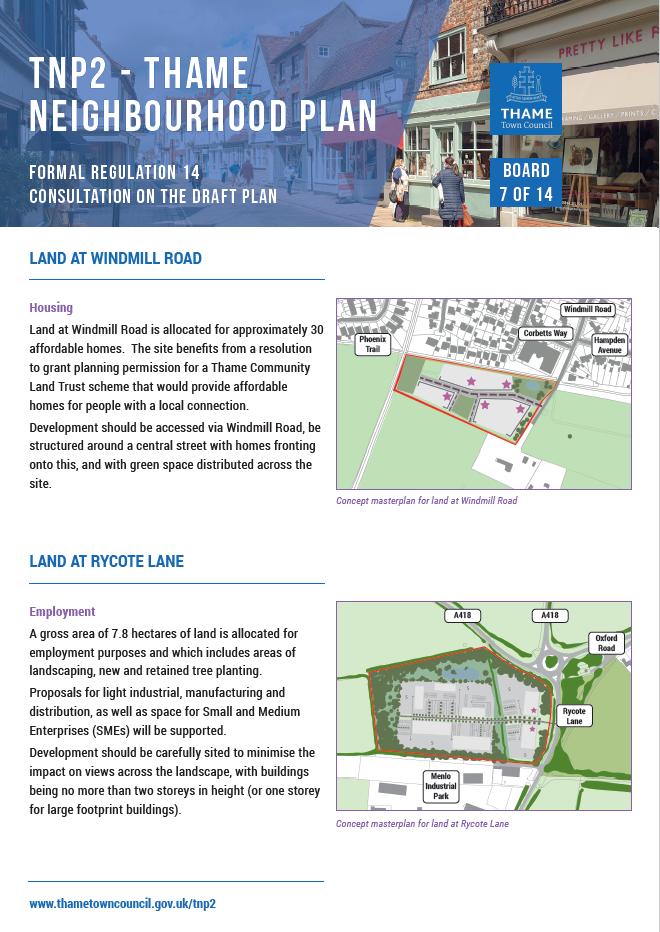
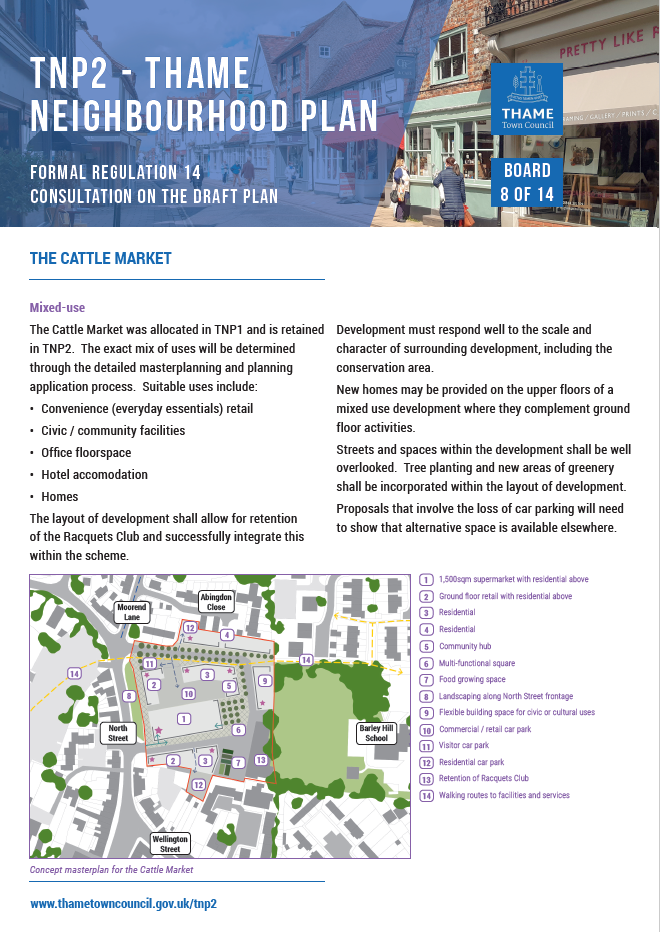
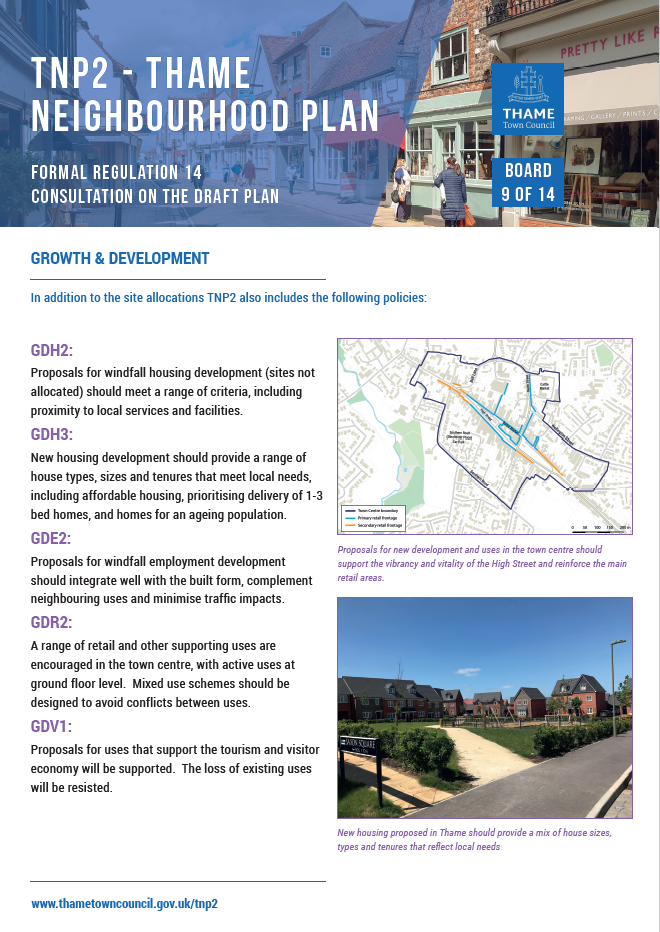
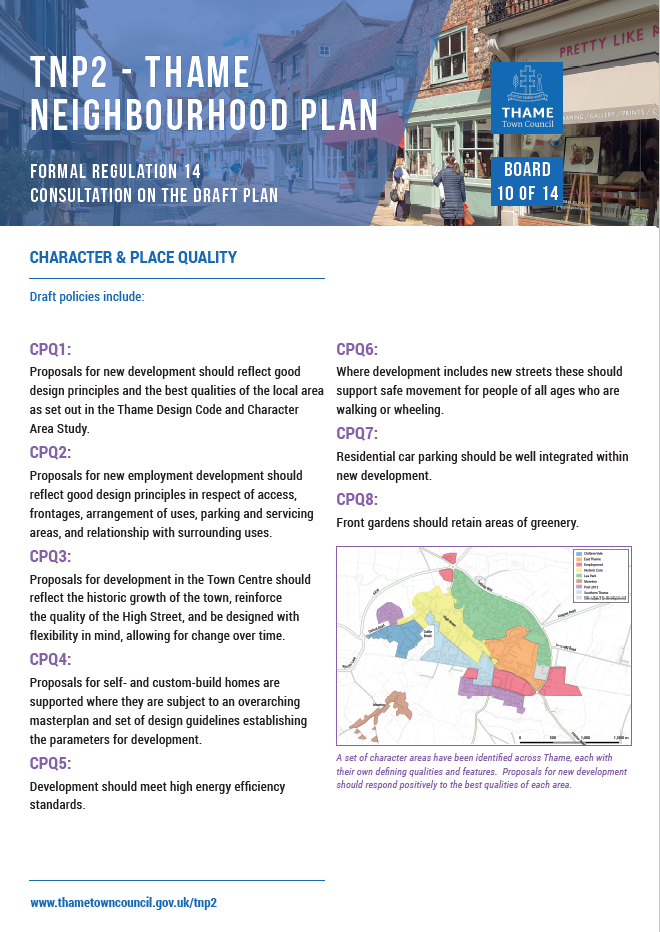
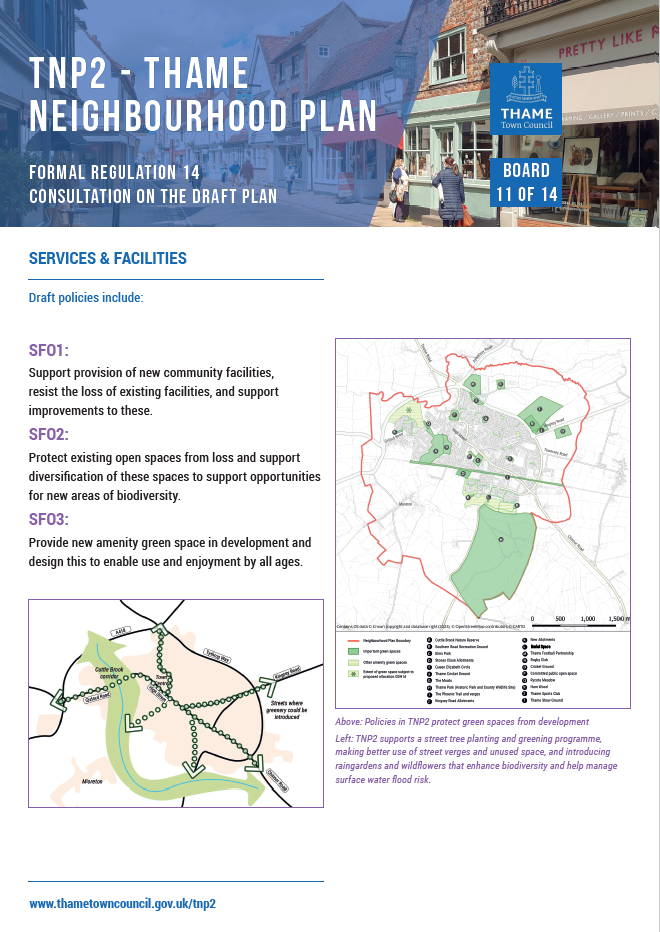
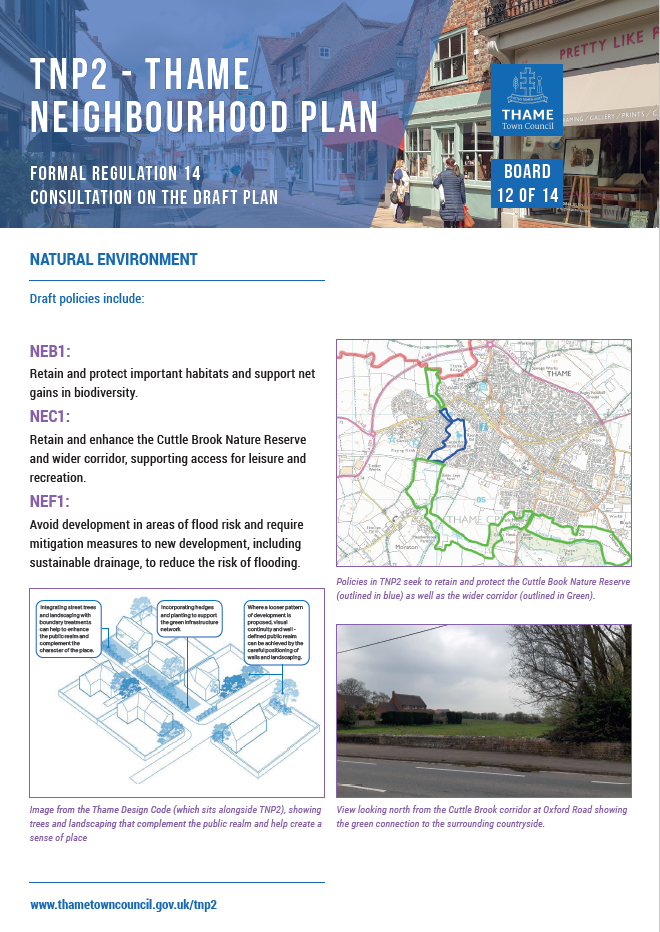
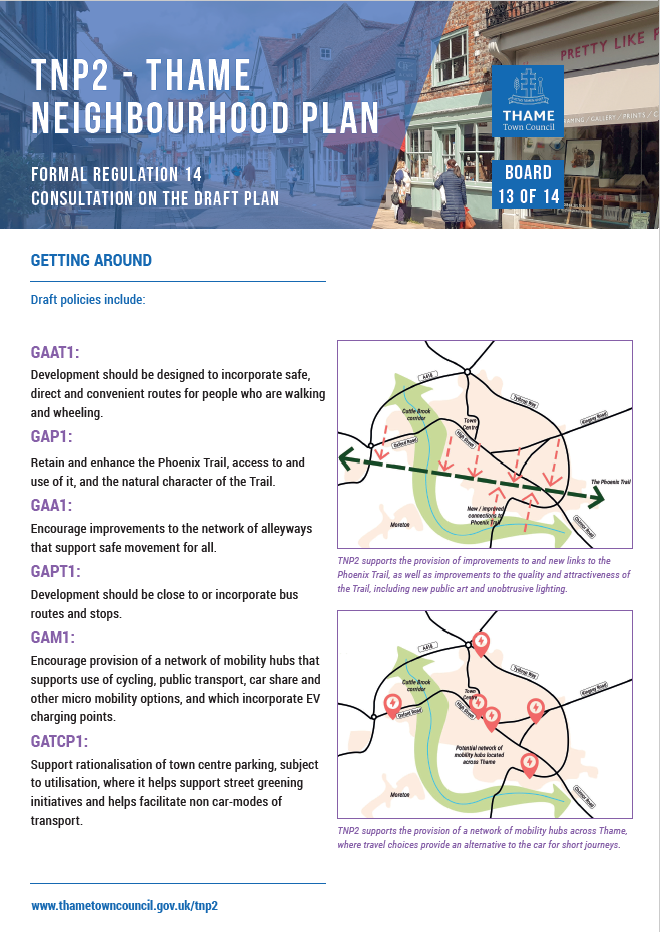
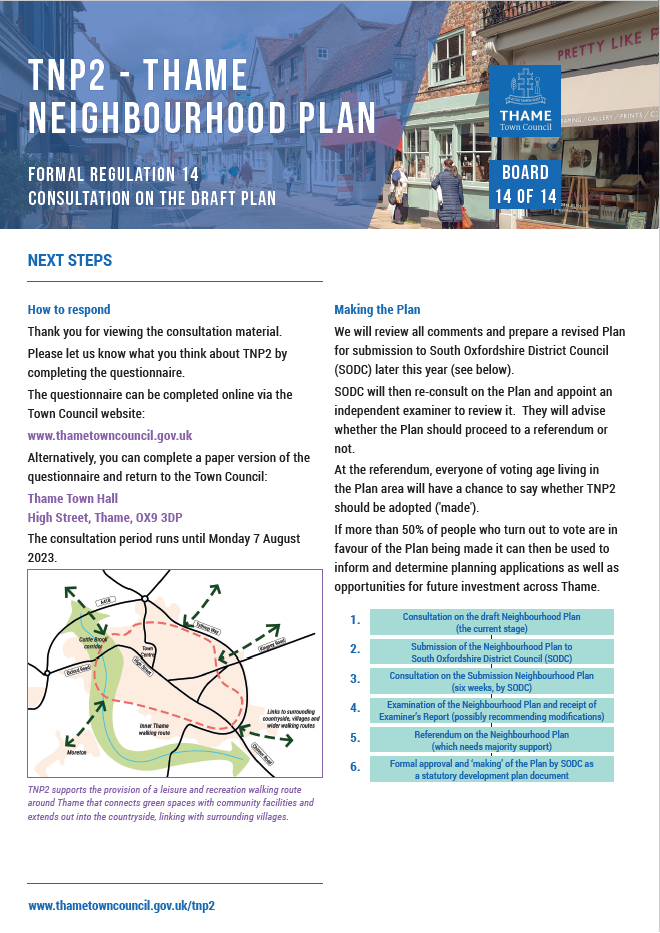
This is the first draft of the revised Thame Neighbourhood Plan.  It suggested policies for how development should happen in Thame, where housing and employment could go and proposed projects to improve the lives of residents.

It was written with the benefit of evidence focused on Thame’s needs and over 1,400 sets of comments already made by residents, businesses, and organisations.

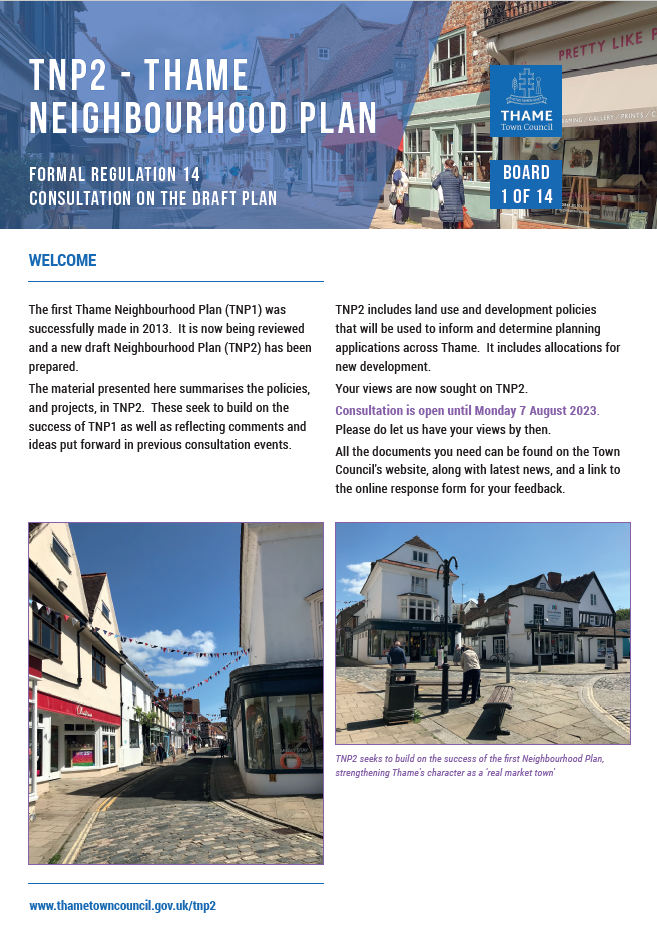
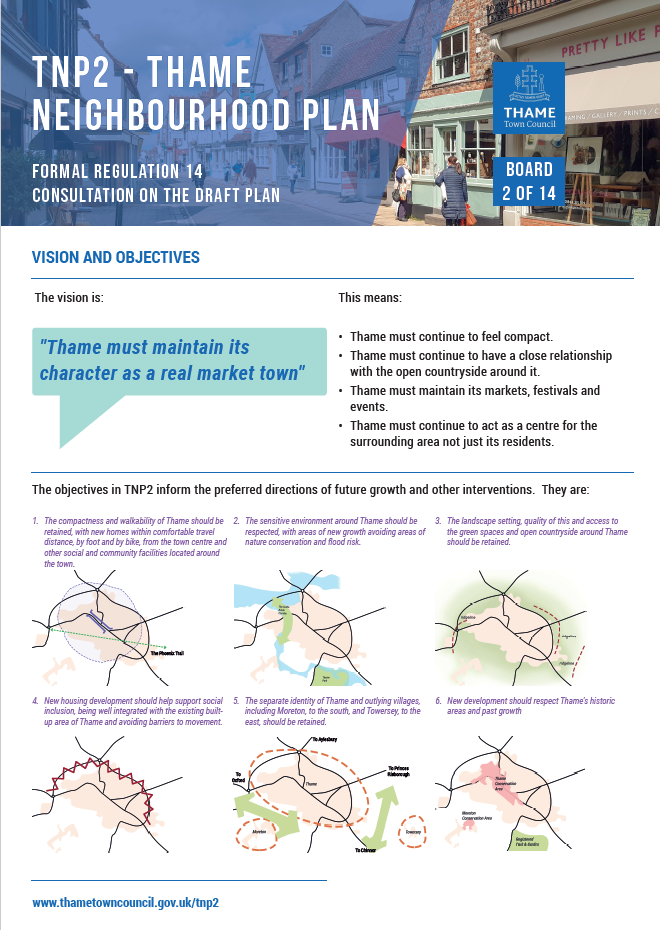
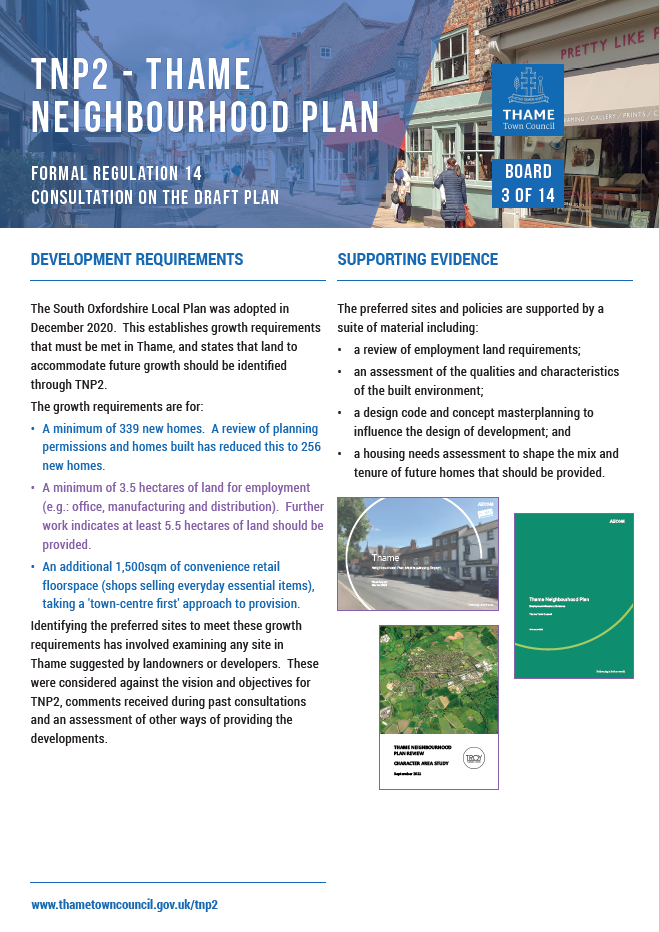
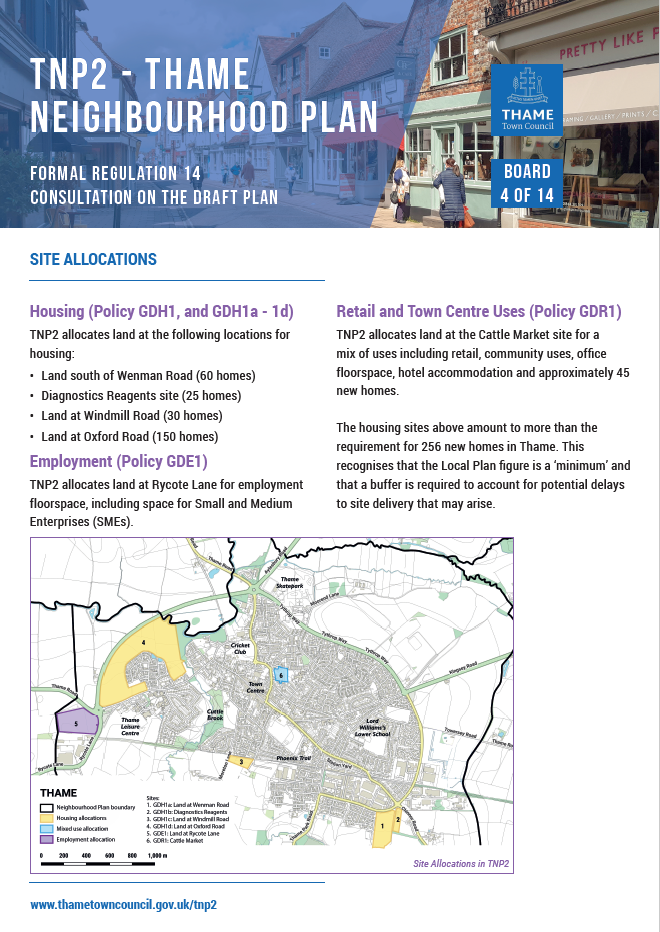
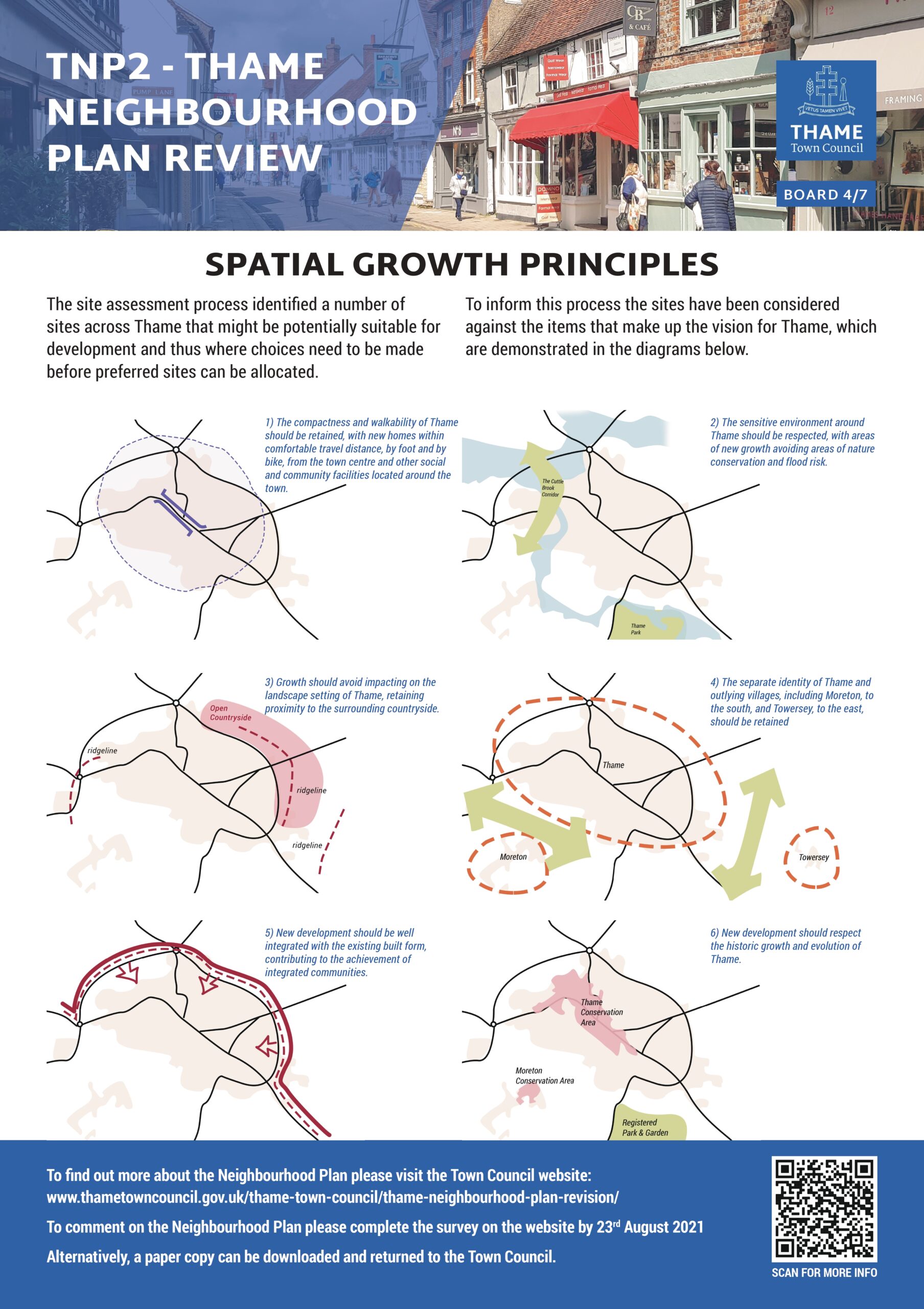
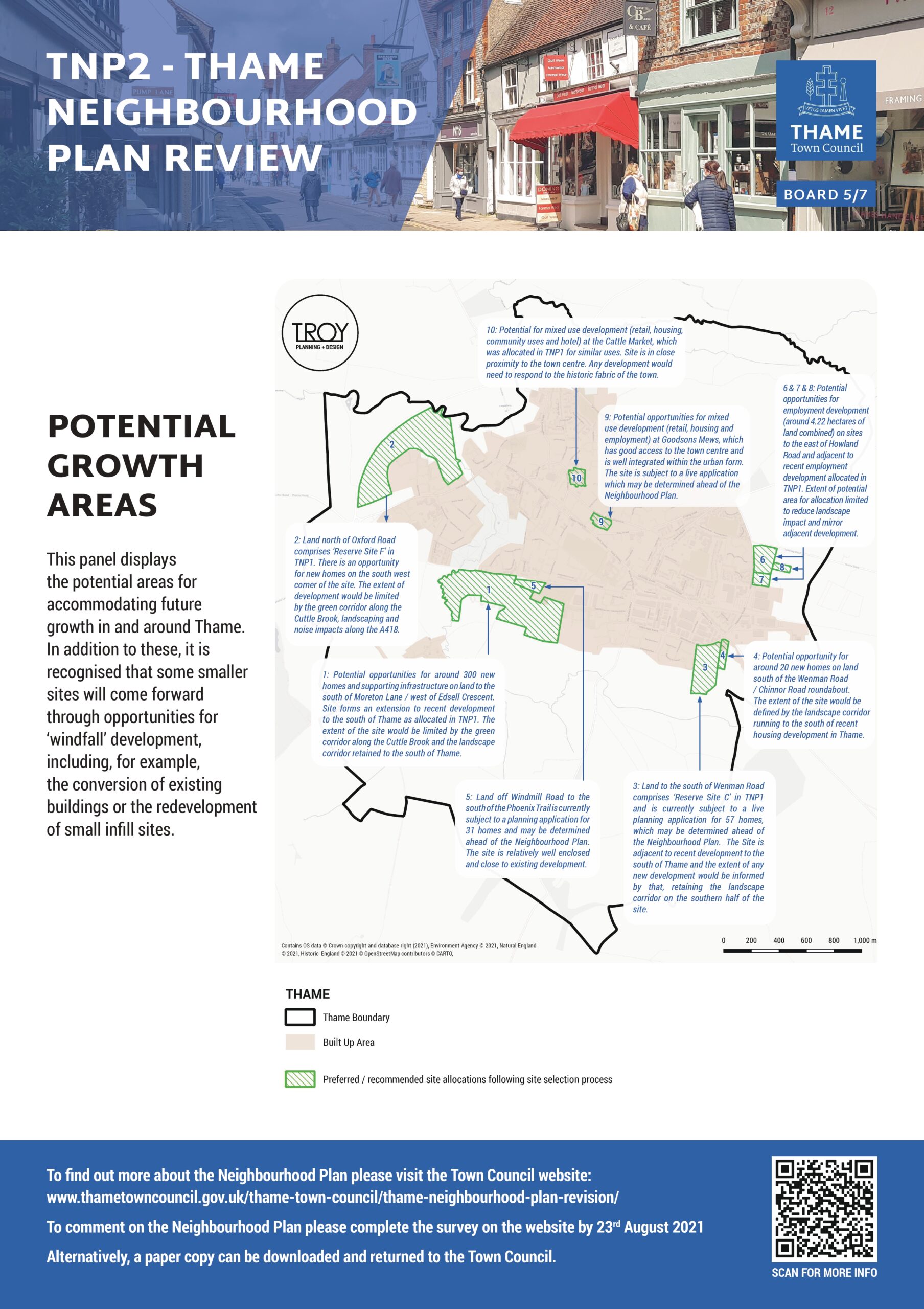
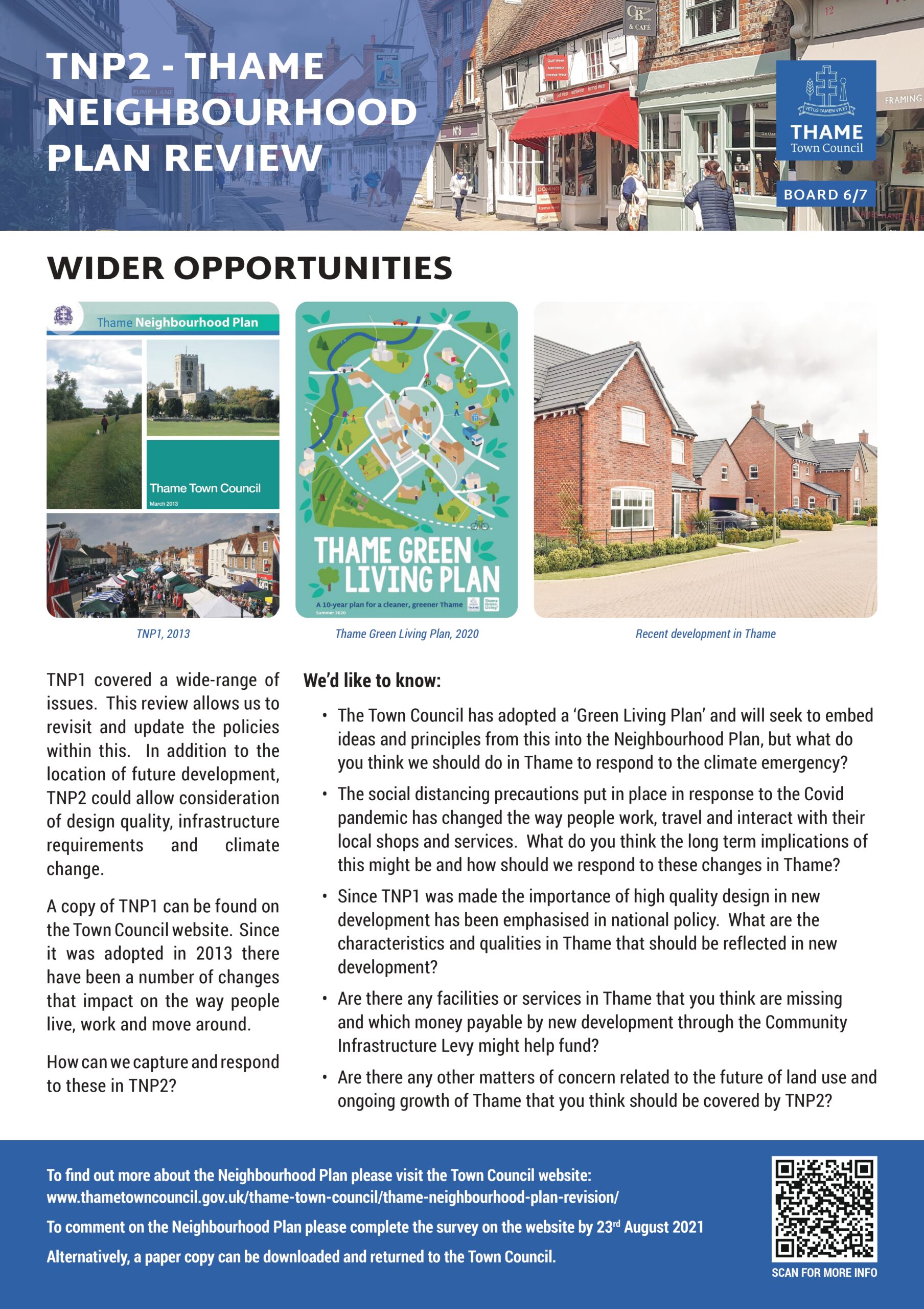
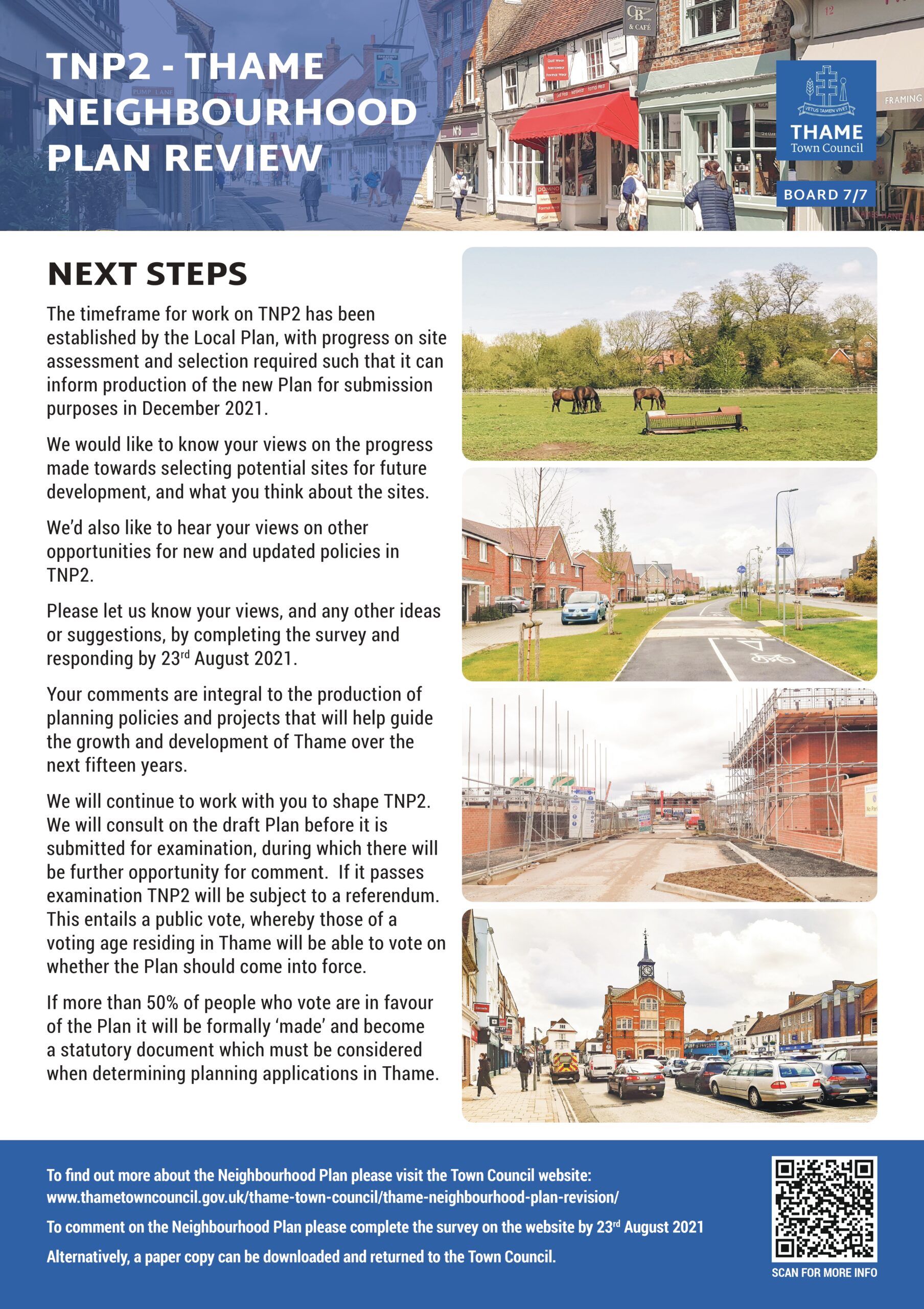
Please scroll through the consultation boards (to the right on laptops/PCs, or below on mobiles).  You can click on the image to enlarge / download it.  Alternatively, you can download PDF versions of all the boards and documents that were directly related to this consultation:

Information Video

TNP2 Myth Busting

Consultation 2

20th December 2021 – 7th February 2022

This consultation looked for feedback on the larger potential employment and housing sites. It also sought views on some of the ideas put forward during the first consultation held in summer 2021.

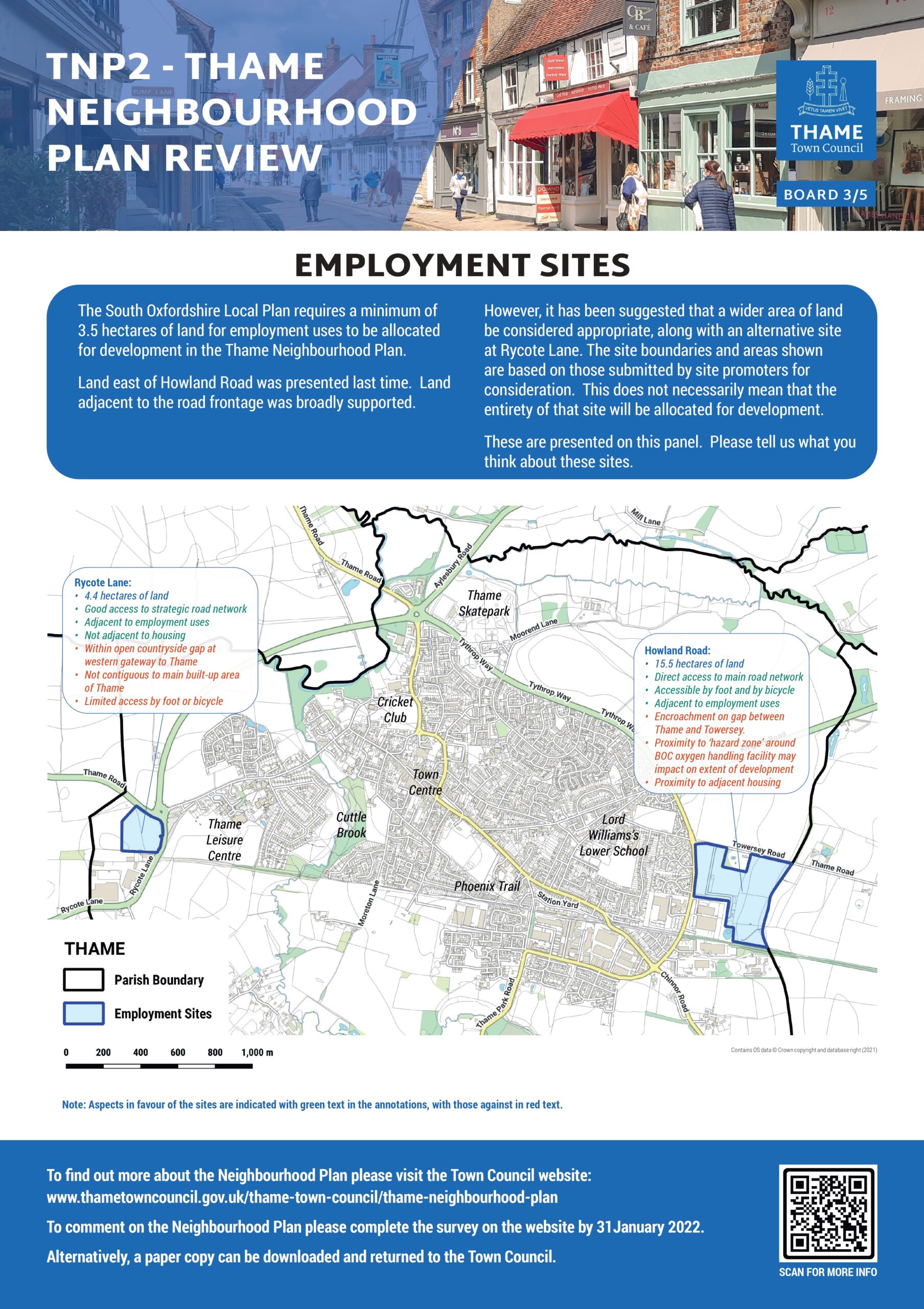
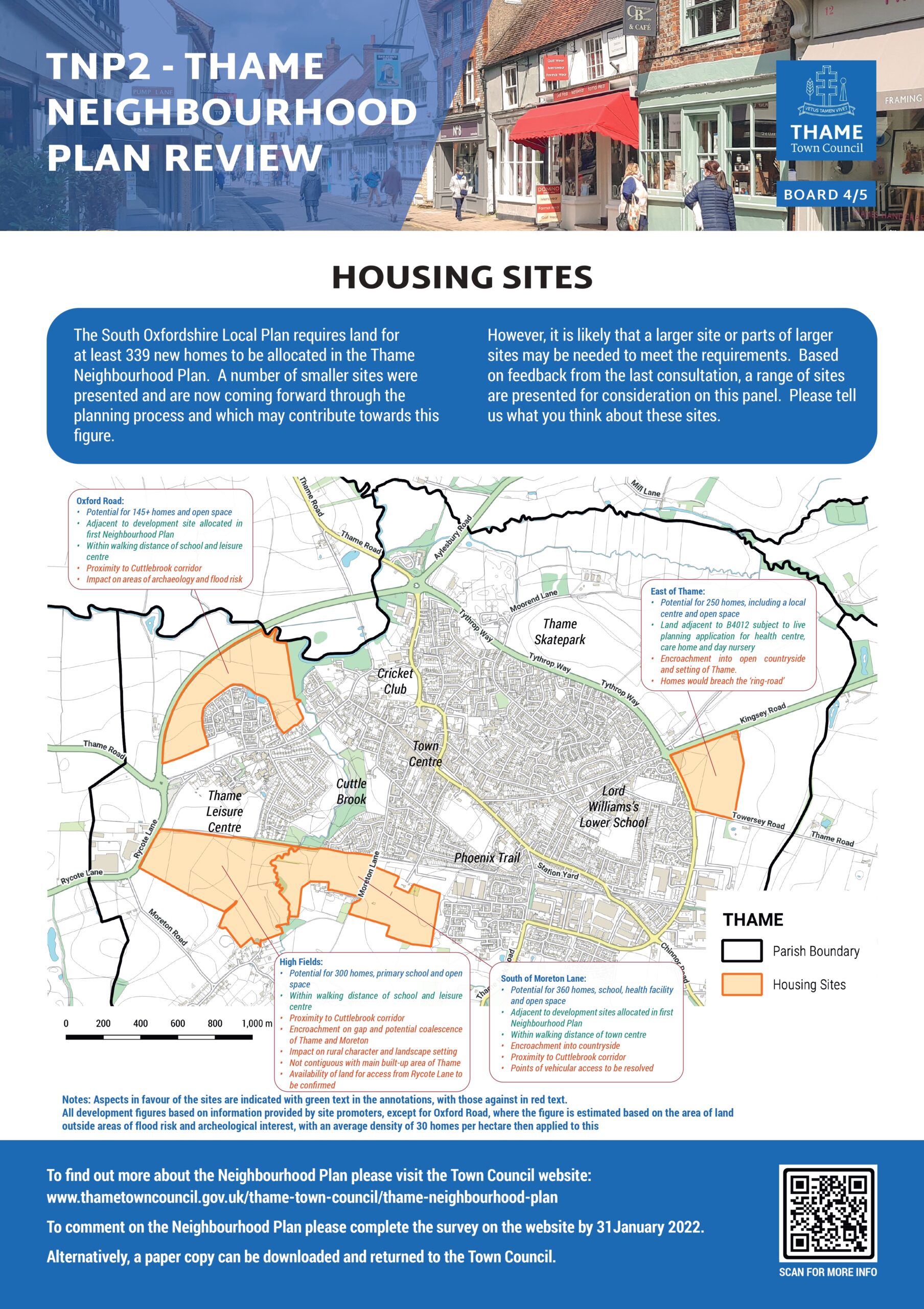
Two possible employment and four possible housing sites were put forward as options. Of these, the majority of people preferred Rycote Lane as an employment site and Oxford Road for housing.

General improvements and extensions to the local walking/cycling network were supported. Improvements to youth services and local health facilities were also raised.

A high number of very detailed comments were made and these were fed into the first draft of the plan which was consulted on during the summer of 2023. The details of what was said can be seen within the Consultation 2 Summary.

Consultation 2 Analysis / Reports

Consultation 2 Documents

Scroll through the consultation boards (to the right on laptops/PCs, or below on mobiles). You can click on the image to enlarge / download it. Alternatively, you can download PDF version of all the boards:

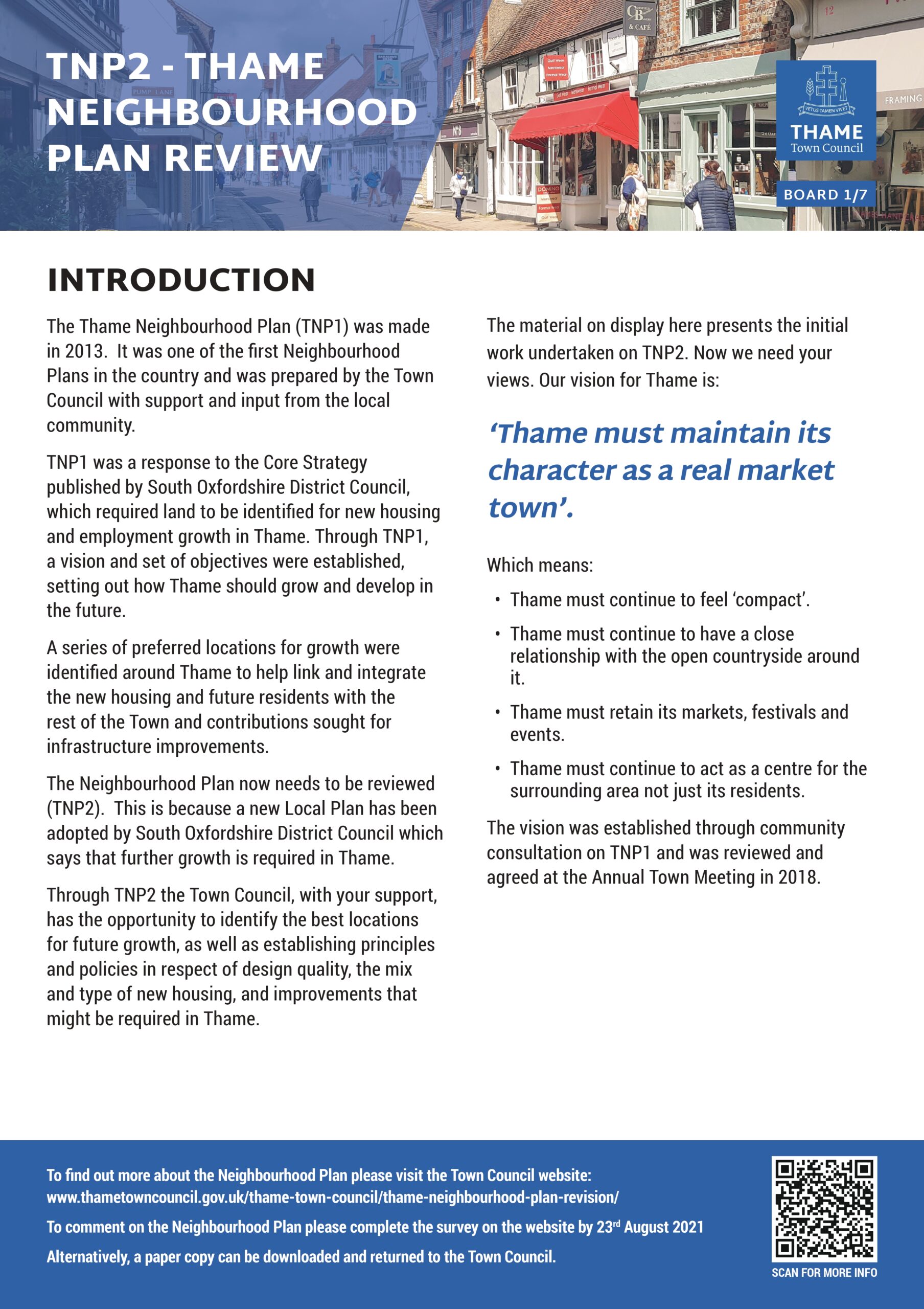
  • TNP2 Consultation Board 1/5 – Welcome & The Consultation

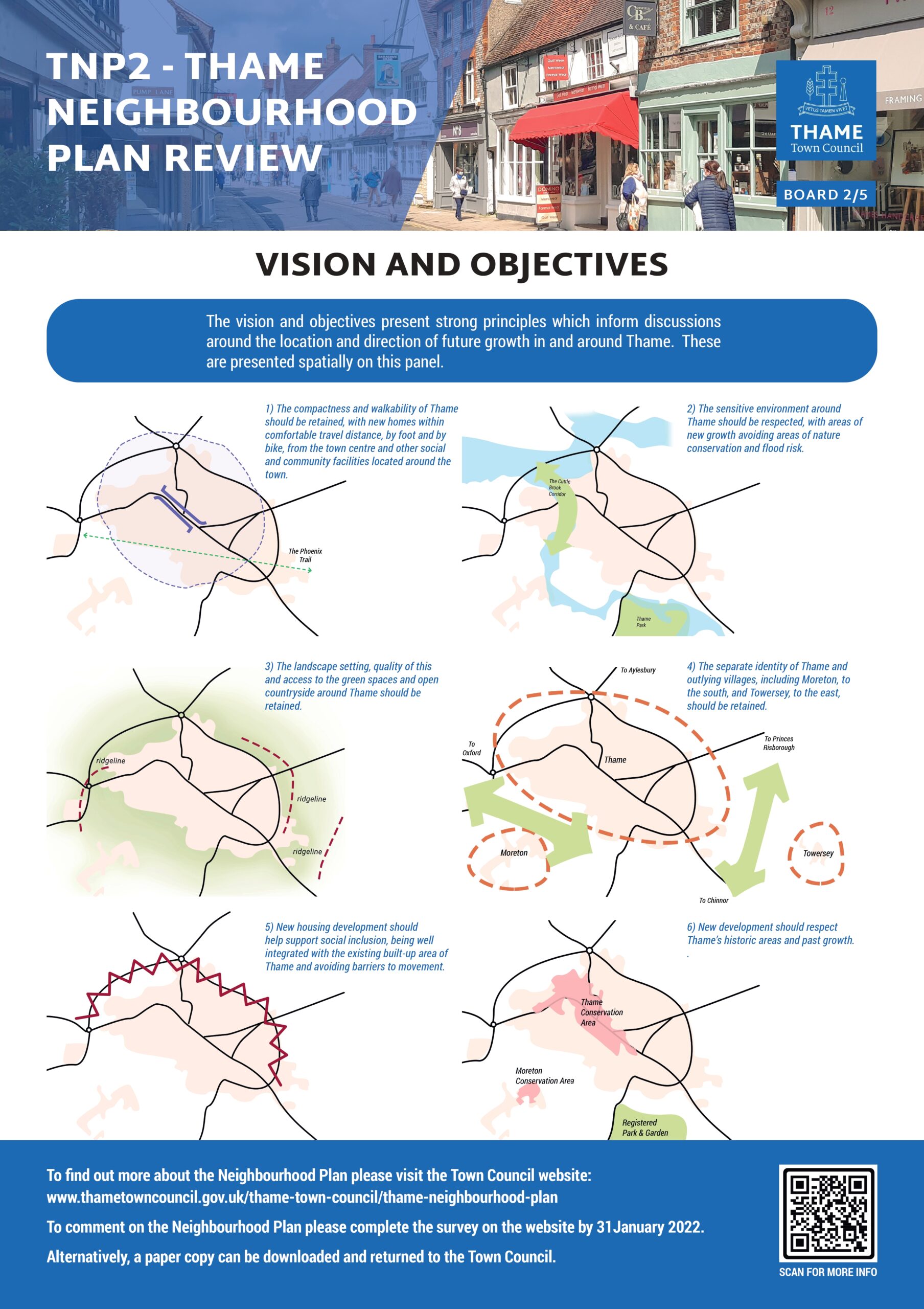
  • TNP2 Consultation Board 2/5 – Vision & Objectives

  • TNP2 Consultation Board 3/5 – Employment Sites

  • TNP2 Consultation Board 4/5 – Housing Sites

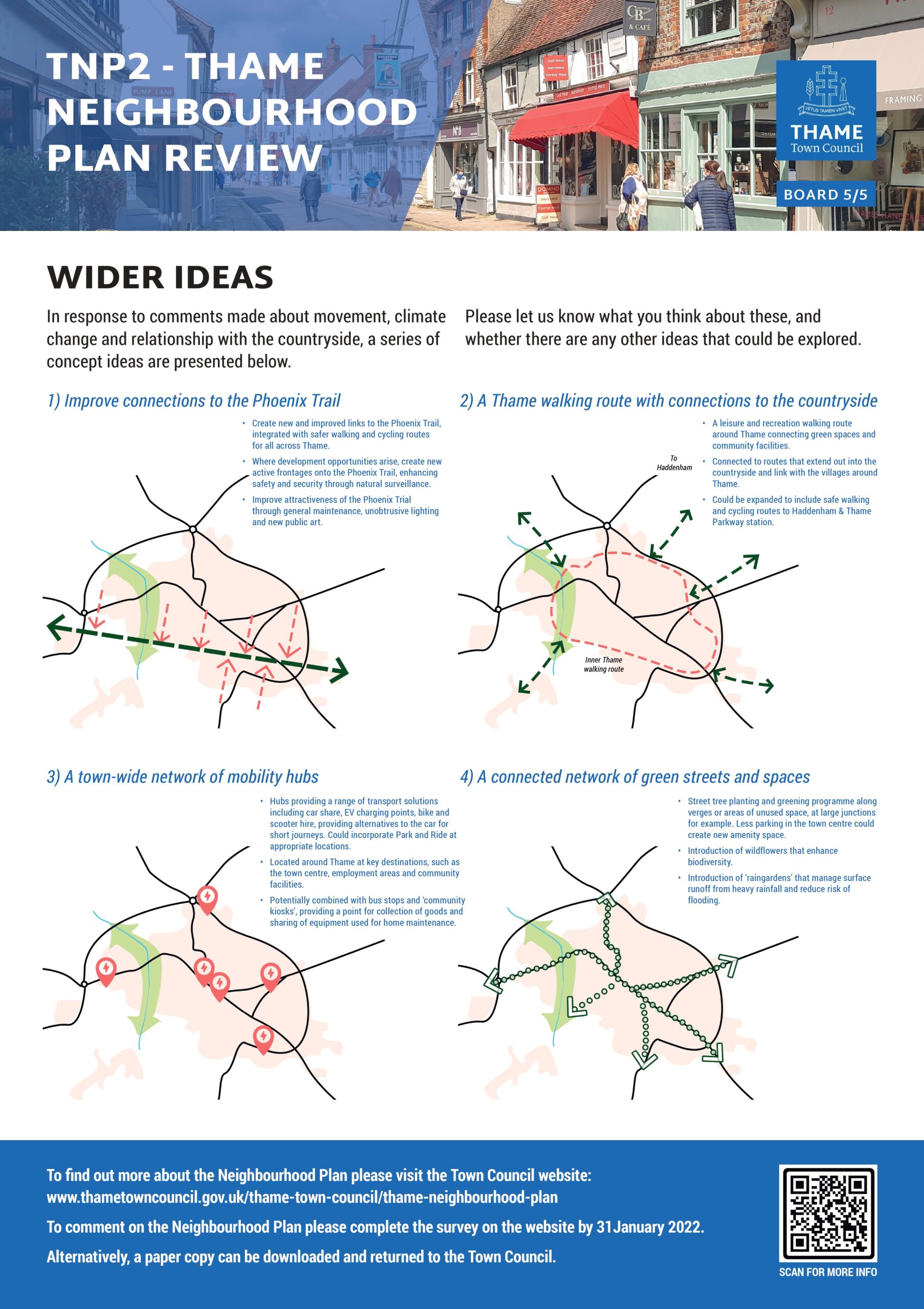
  • TNP2 Consultation Board 5/5 – Wider Ideas

Consultation 1

2 August 2021 to 23 August 2021

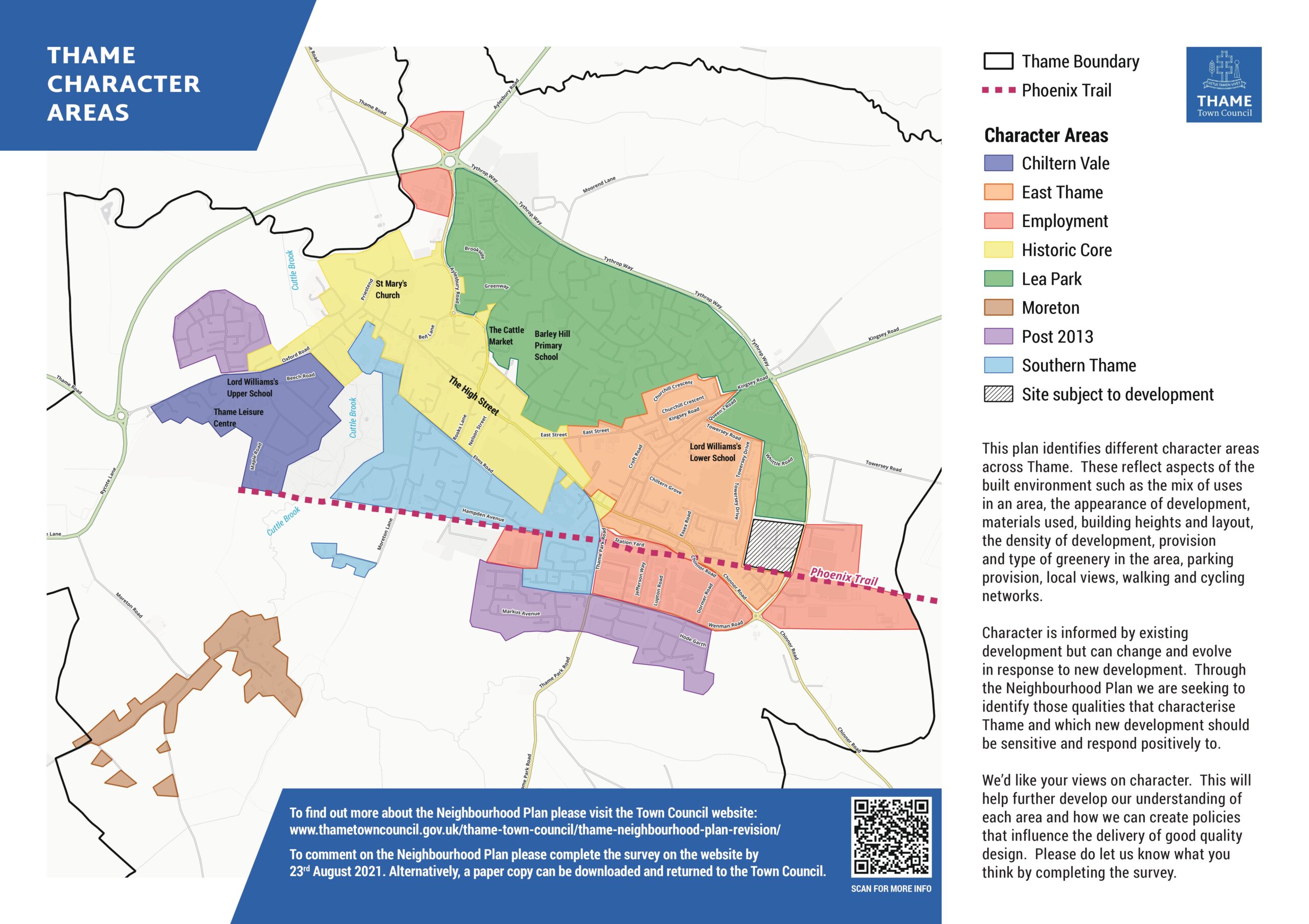
This consultation explored people’s views on sites allocated for development as well as their views on the character of the area within which they live: what they considered to be positive features and qualities of the area, and what concerns they had, if any, about the impact of new development. Over 500 individuals, businesses and organisations submitted comments in response to the consultation. These views helped further develop our understanding of each area of Thame and how we could create policies that influence the delivery of good quality design for them.

Consultation 1 Analysis

Consultation 1 Documents

Scroll through the consultation boards (to the right on laptops/PCs, or below on mobiles). You can click on the image to enlarge / download it. Alternatively, you can download PDF version of all the boards:

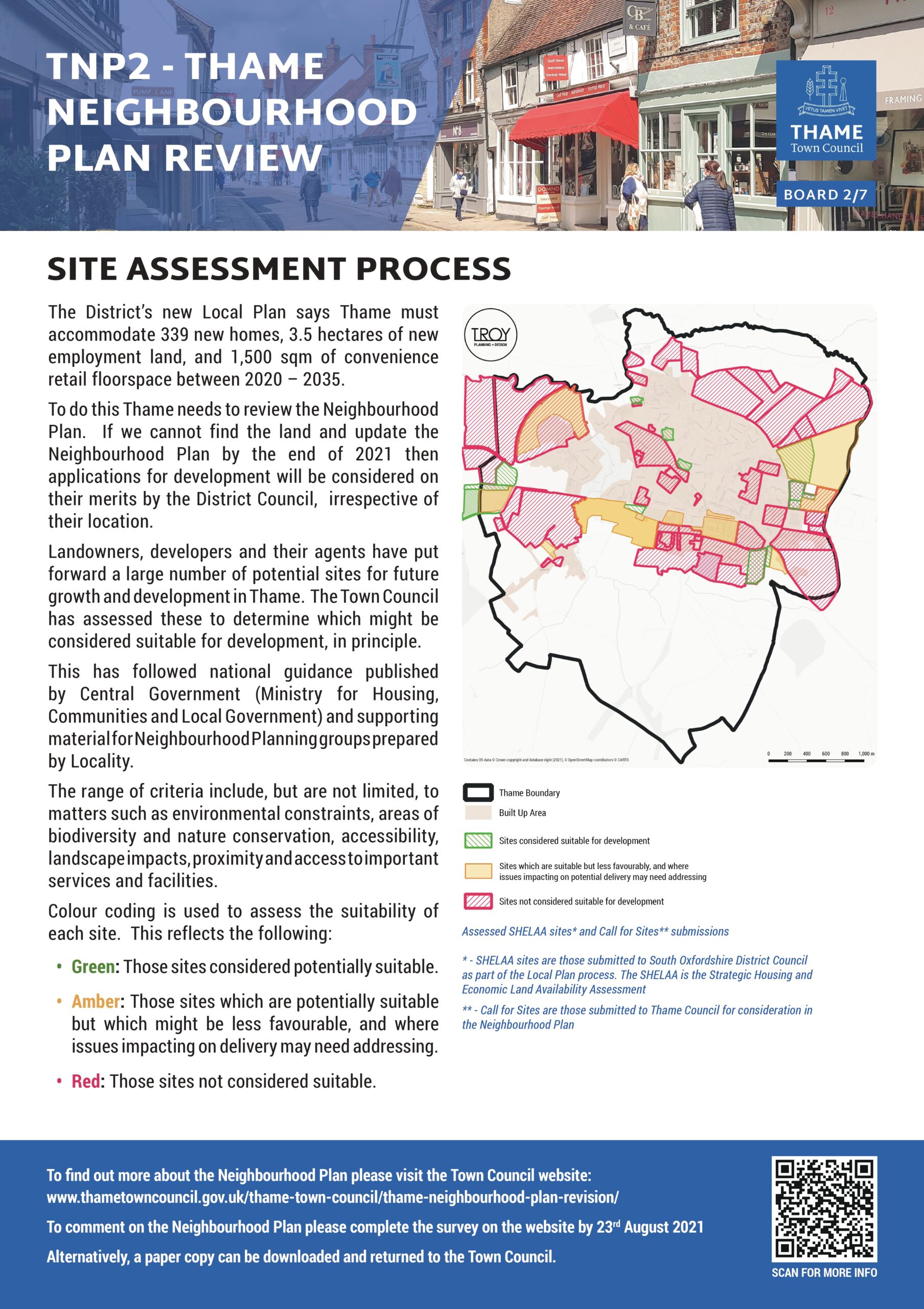
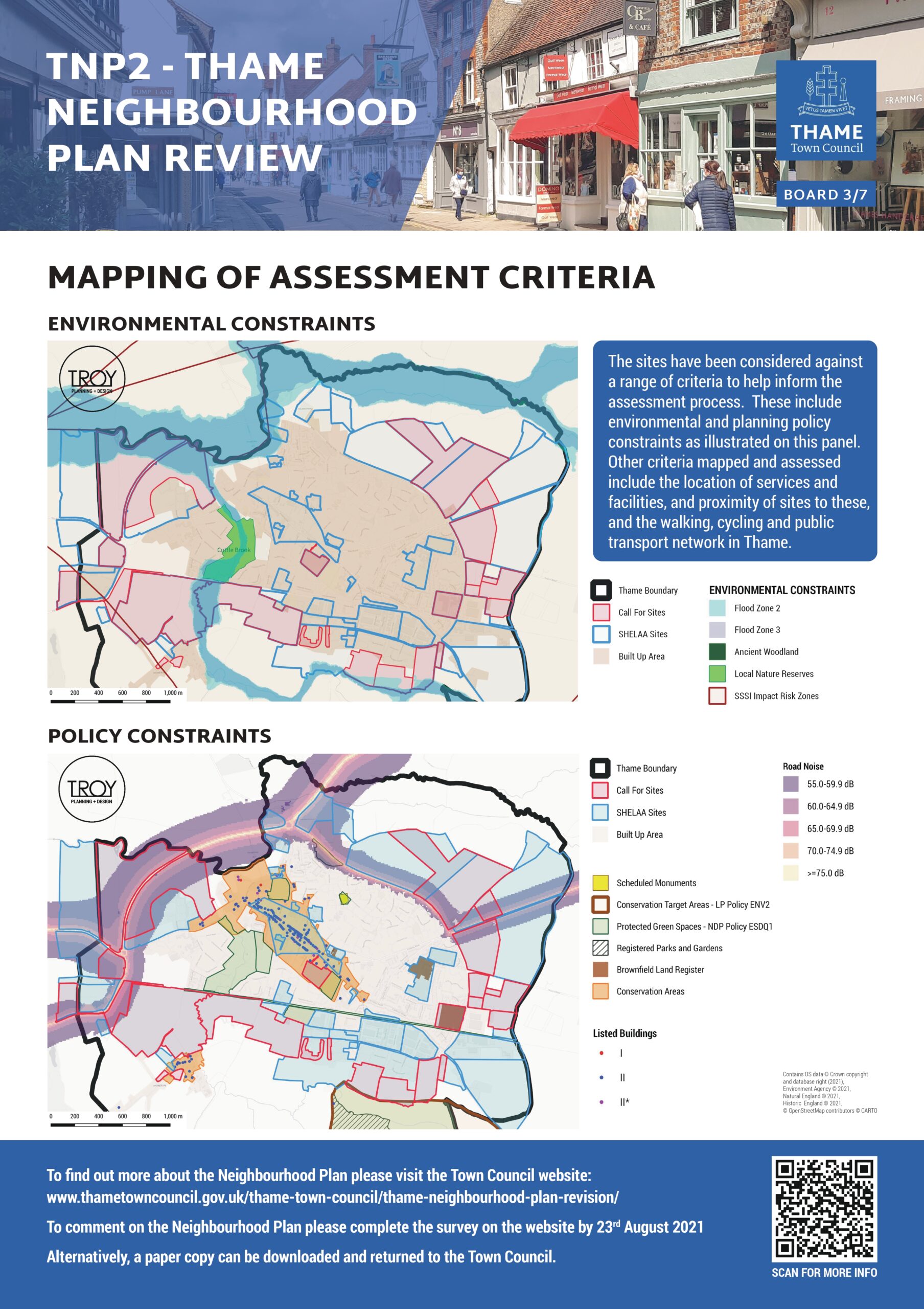
Please note the Site Assessment Table has too many columns to comfortably fit onto a normal screen or sheet of paper.  Each site, therefore, appears 4 times within the table with different matters addressed each time.

QUESTIONS ASKED DURING THE CONSULTATION

Q: Why Should I Vote?

A: Neighbourhood planning was introduced under the Localism Act 2011 to give local communities more control in the planning of their neighbourhoods. Neighbourhood Plans give new rights and powers to local communities to help shape new development in their area.

Neighbourhood Plans also enable communities to develop a shared vision for their neighbourhood and deliver the sustainable development they need through planning policies relating to the development and use of land.

After four consultations and more than 1,600 sets of comments, the final draft of Thame’s Neighbourhood Plan 2 (TNP2) was submitted for independent examination in June this year, where the examiner recommended that it proceed to referendum.

Q: We’ve already given support. Why do we need to vote in the Referendum?

A: The Thame Neighbourhood Plan has been subject to 4 rounds of consultation and has been scrutinised by residents and businesses and experts across many fields, such as Historic England, the Environment Agency and local flood risk specialists, school planning teams, etc. It has been examined and approved by an independent planning specialist.

However, this isn’t enough. Neighbourhood Plans are unique in needing the majority of local residents to vote for them. Only then can the document be fully used when judging local planning applications.

Q: Why are you proposing to build homes in the flood plain?

A: All of the homes proposed in TNP2 would be built on sites of lowest probable risk, as defined by the Environment Agency and other authorities. As part of the planning process the developers will have to prove the homes will not be at risk of flooding from any water source between now and the next 100 years, even after taking into account the much higher rainfall events expected due to climate change.

Q: Will new development increase the flood risk for existing homes in Thame and villages downstream?

A: New roofs, roads and patios add hard surfaces that will shed rainwater. Any development will have to have means of capturing and storing this water on site and slowly release it at a rate that would not be greater than if it the development had not happened. 

Developers will be asked to provide sufficient storage for an extreme 1-in-100 year rainfall event, with a large allowance added (typically 30-40%) to cope for increased rainfall due to climate change. This should ensure neighbouring houses and communities downstream of Thame will not see any change to their flood risk.

Q: We’ve just seen in the news that flood risk is growing across the country.  Has this Plan taken account of the latest information?

A: The most up-to-date information available was used in developing the Plan. The Environment Agency releases new flood risk maps roughly every 5 years, with improvements made as technology improves and information is received. The new maps have yet to be published.

However, the Plan is future-proof in this matter and any current or future planning application would have to take account of the latest information and advice. This means that while the sites chosen in the Plan have been considered capable of being used by the Environment Agency and other flood specialists, the very latest information will be used to check there will be no new or altered risk.

Q: Our doctors and schools are overflowing.  Why are we building more homes?

A: The houses were allotted to Thame by the District Council through their District-wide Local Plan for houses and jobs.  The local education and health services had input into both the District’s Local Plan and Thame’s TNP2 and did not object to the numbers of homes proposed for Thame, meaning we cannot stop these homes being built on those grounds. 

When developers put forward planning applications for the sites in TNP2 the health and educations services will ask for money to make sure they can provide services to the occupants of the new homes.

Q: What about sewage?  The existing treatment works in Thame can’t cope and are polluting the local river.

A: Thames Water are legally obliged to connect services to developers. However, they will and have, made comments to planning applications noting improvement works are needed. 

The Environment Agency are monitoring Thames Water’s activities and have also commented on the need for new facilities. Both are calling for no new large developments to be allowed to be occupied until improvements have been made to the Thame Sewage Treatment Works. Some improvements are already in the pipeline for 2025.

Q: Water pressure is already low at Oxford Road. Won’t adding more houses make that worse?

A: Thames Water have asked for time to allow them to provide improvements to the local network of pumps before any new houses are allowed to be occupied.  This could improve the water pressure for the existing housing, too.

Q: Are you building on what was protected open space at Oxford Road?

A: Oxford Road had a reserve site kept for future housing and education needs. These areas were unknowingly underlain by archaeology of national significance. 

Through TNP2 it is proposed to use some of the land that was made available to walk through (but not on) for housing, while re-providing open space on the area kept for archaeology. There will be no net loss of open space and large areas have now been proposed as publicly usable parkland.

Q: Traffic is already a problem for Thame. Will the new homes and industrial areas make this worse?

A: TNP2 has worked to identify where and how new footpath and bicycle paths can be provided to make it easier for people to walk and wheel to key locations such as the Town Centre. 

People will still need to use cars and buses, though, and the Highways Authority have stated they are content that the development TNP2 proposes can be delivered without causing disruption.  When each site comes forward for planning permission they will be scrutinised again to test the impact on the local network.  Developers will likely be asked to contribute to local road, bus and walking and cycling projects, too.

Q: Why aren’t existing trees and wildlife being protected?

A: The District have tree and ecology specialists who agree what trees and habitats should be kept on development sites. Where trees and hedgerows, etc. are lost, planning rules mean the developers have to provide more planting and habitats than what was lost to leave sites better off for nature in the longer term. 

Furthermore, the specialist officers recommend native trees and plants for play, landscaping and amenity areas and that rainwater runoff is held in natural pond-like features rather than storage tanks. 

Q: What happened to the bicycle route to Haddenham and Thame Parkway?  This was given support in the first Thame Neighbourhood Plan.

A: Legally, TNP2 cannot plan outside of its boundaries but does give it strong support as a project.  Oxfordshire County Council will be able to ask for funds from developers in and around Thame to help deliver the cycleway and similarly, Buckinghamshire Council will seek funds from developments in Haddenham. It remains the intention of both those Councils to build the cycleway and provide an onward connection into Buckinghamshire’s Greenway network.

Q: Why are you building on agricultural land? This should be kept for food.

A: There isn’t enough used, or brownfield land to provide for the housing and employment needs allocated for Thame.  There also appears to be little difference between the sites put forward for development around Thame in terms of their quality and uses.


ADDRESSING CONCERNS

There has been insufficient consultation with local residents when preparing the Plan.

The Plan has been Examined by an independent planning expert who has judged dozens of neighbourhood plans.  The Examiner has stated he was satisfied the Plan has complied with the required regulations and had an inclusive approach in seeking the opinions of all throughout the process.

The Environment Agency has objected to the development at Oxford Road because of flood risk.

The Environment Agency has informed the developer of the detailed information they need to be presented with before the Agency can approve any submitted flood risk assessment.  The site includes the areas of housing as well as the proposed public open space and footpaths.  Until this information has been provided the Agency must continue to object.

We do not need more employment land, there is no unemployment in Thame.

There are very few opportunities for Thame businesses to expand or growth in Thame or nearby.  Without viable long-term sites businesses will have to plan to move away.  Between 2011 and 2020, our working age population grew by over 1,200 people but our employment land did not.

The land swap at Oxford Road only benefits the developer.

The land swap would not have been needed but under the area reserved for more housing and school use nationally significant archaeology was found that must not be disturbed.

The Plan is anti-car and is getting rid of car parking.

The Plan recognises that Thame is a market town that serves nearby residents and visitors.  The Policy on parking looks to keep all town centre parking and would only allow its loss where up to date surveys prove the Town Centre has capacity.  Even then, the loss would have to be accompanied by improvements to the public realm, such as new green areas and providing better provision for those with mobility difficulties.

Because of windfall development (applications for housing away from sites identified within plans) TNP2 would build more homes in Thame than we need to.

A great deal of work went into making sure the District Council had an accurate and up to date list of what houses had been gained or lost through new build, demolition, conversion and sub-divisions in Thame. 

The Plan has taken into account all homes completed, sites under construction and with planning permission up to 1 April 2023 when, to make sure everyone was looking at the same figures, the tally was frozen.  Almost all houses built since them would, therefore, have already counted towards supply.  The numbers we have left to deliver (143) are, therefore, balanced either by the allocated sites in TNP2 or those sites already on their way to being delivered.